Entanglement communication
The PeripheralEntanglement communication is a covert channel linking telepresence peripherals to Lowbeer, enabling her to communicate with people inside a gathering where personal devices are forbidden. It turns an invisible network into a bodily experience: Lowbeer’s messages arrive as “static in your bones,” a phrase that makes remote coordination feel less like ordinary speech than an intrusion into the user’s embodied awareness.
Definition and Operation
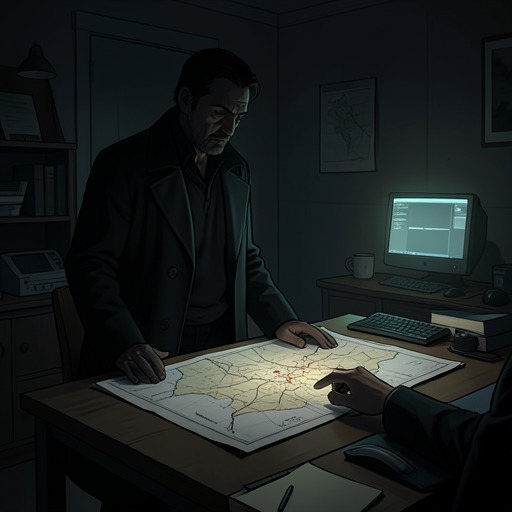
At Daedra’s gathering, the ban on personal communication devices creates a practical obstacle for identifying the murderer being sought there. Lowbeer explains that Flynne and Mr. Penske may attend as peripherals and therefore count as exceptions of a sort, but their activity will be closely monitored. If Flynne recognizes the suspect, the problem will be how to tell Lowbeer without exposing the communication.
The solution is a communications platform placed inside Flynne’s newly installed cognitive bundle. Lowbeer says the bundle is literally a bundle and that the security bubble around the event will not detect its platform. Flynne will hear Lowbeer through the link as “static in your bones”; Lowbeer describes the sensation as peculiarly unsettling, while presenting it as the safest available means of communicating. The channel is therefore designed not merely to reach Flynne, but to do so while remaining hidden from the event’s security arrangements.
Use at Daedra’s Gathering
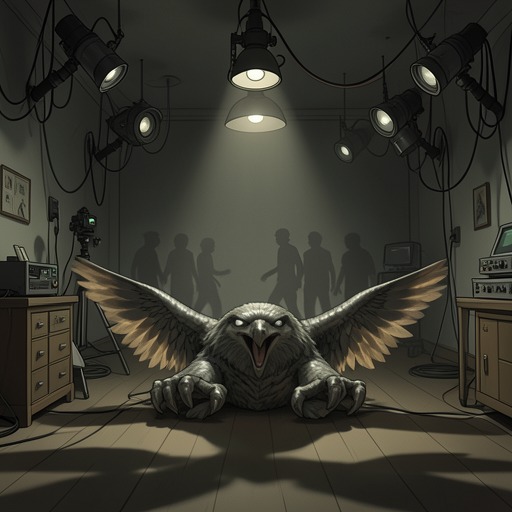
When Flynne, Wilf, and Conner enter the gathering, the transformed interior is crowded, with the walls removed and the view of the river visible through the windows. Conner takes up a bodyguard’s watch, while Flynne observes how many people have assembled. In the midst of that public scene, Lowbeer’s voice arrives through the peripheral as a deep, modulated sensation. She tests the entanglement and asks for acknowledgment.
Flynne answers with two taps of the tiny magnet in the forward-left quarter of the palate. The exchange demonstrates that the channel is not simply an inaudible version of spoken conversation: Lowbeer’s message is felt as bone-deep sound, and Flynne’s acknowledgment is a small physical signal. Lowbeer confirms the test and directs Flynne to circulate and tell Wilf. The concealed link thus supports coordination while Flynne moves through the gathering, where the group must maintain distance and watch for a possible suspect.
The channel’s importance is sharpened by the setting. Personal devices are prohibited, the peripherals are monitored, and any recognition of the murderer would have to be conveyed without openly contacting Lowbeer. Entanglement communication supplies that hidden route, but does not remove the uncertainty of the task: Lowbeer has already warned that the identification itself may fail, and that success would bring a further difficulty.
The Channel and the Wider Investigation
The novel places the entanglement link among technologies that repeatedly cross boundaries between ordinary devices and remote bodily presence. A device initially presented as a game controller is later identified as a hands-free telepresent interface; Flynne’s first experience of an anthropomorphic drone likewise confronts her with a body and voice that are not her own. Against that background, “static in your bones” gives a distinctive form to communication across the peripheral connection: information from elsewhere is registered as an experience within the body being operated.
The link also makes the cognitive bundle a meeting point between concealment and control. Its platform is meant to evade the gathering’s security bubble, yet Flynne and Conner are still to be monitored closely as peripherals. The system enables discreet cooperation without making its users wholly unobserved. That tension matters to the investigation: the channel can carry Lowbeer’s instructions, but the characters still have to interpret what they see, decide whether they have identified the right person, and act within the constraints of the event.
Vespasian’s Cube
The phrase “Vespasian’s Cube” marks a later scene in which Lowbeer’s communication again reaches Flynne through bone-static. Flynne is speaking with Hamed al-Habib when she hears Lowbeer remark on Sir Henry’s surprising involvement and speculate that he must have suffered a concealed setback in his affairs. Flynne answers aloud, momentarily forgetting that they are not alone and that she is not supposed to speak to Lowbeer that night. Hamed notices the lapse and asks what she means.
The scene shows a limit as well as a use of the channel. Lowbeer’s message reaches Flynne privately, but Flynne’s response can still be spoken into the surrounding conversation, revealing that something has interrupted her attention. The communication is concealed at the level of transmission, not a guarantee that its recipient’s behavior will remain unremarkable to others.
At the same moment, the scene turns from covert exchange toward action. Flynne’s cuffs and the granite beneath her hand crumble into talc, and the candy-cane gun rises into her grasp. She recognizes that the Homes drones are hitting Coldiron and returns to the couch in Janice’s house before standing with the gun. Entanglement communication belongs to this abrupt movement between distant situations: Lowbeer’s voice, the gathering at Vespasian’s Cube, and the attack on Coldiron converge within Flynne’s experience. The channel’s significance lies in making that coordination possible, while the surrounding scenes preserve its unsettling cost—the message is not merely heard, but felt as an intrusion into the body through which Flynne acts.